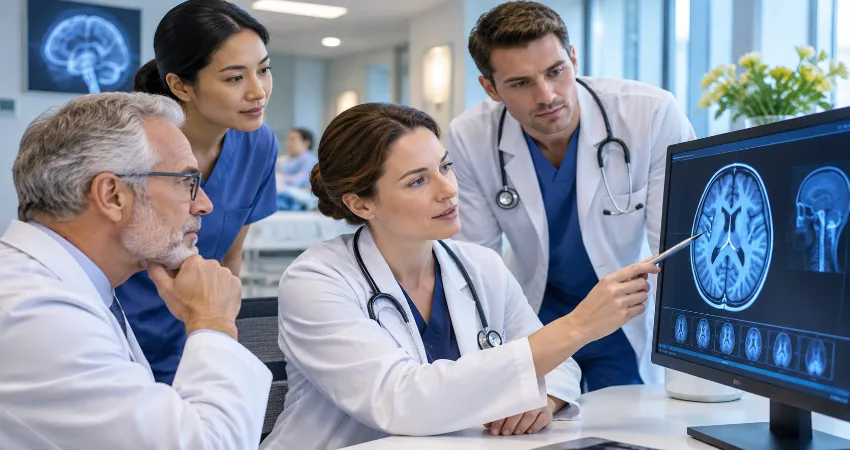
Choosing a hospital for stroke treatment can make an important difference in recovery. A stroke occurs when blood flow to part of the brain is blocked or a blood vessel in the brain ruptures. Both situations require immediate medical attention. Hospitals with specialized stroke teams, advanced imaging, emergency procedures, and rehabilitation services can provide coordinated care throughout treatment and recovery.
The United States has many hospitals offering excellent neurological care. However, a strong general hospital reputation does not automatically mean that every location provides the same stroke services. Patients and families should consider stroke-center certification, emergency treatment capabilities, rehabilitation support, and access to experienced specialists.
This guide explores 12 prominent US hospitals with established stroke programs. The selection reflects documented clinical services, specialized facilities, and relevant national recognition. It is not a ranking based on directly comparable stroke survival rates. During a suspected stroke, call 911 immediately rather than traveling to a distant hospital.
How to Identify a Hospital With Advanced Stroke Care?
A Comprehensive Stroke Center is equipped to manage complicated strokes requiring specialized neurological, surgical, and intensive care. The Joint Commission offers this advanced certification in collaboration with the American Heart Association and American Stroke Association. Certification assesses standards, clinical practices, and performance measurement.
Patients should also examine access to mechanical thrombectomy, clot-dissolving medication, neurocritical care, and rehabilitation. These services address different stages of stroke management. The appropriate hospital depends on the patient’s condition, location, treatment needs, and emergency medical services recommendations.
Top 12 Hospitals in the US for Stroke Treatment
1. NYU Langone Health, New York
NYU Langone operates comprehensive stroke services across Manhattan, Brooklyn, and Long Island. Its teams include vascular neurologists, neurosurgeons, neurointensivists, and rehabilitation professionals. Emergency evaluation and advanced treatment are available around the clock. Rusk Rehabilitation supports recovery involving movement, communication, and daily activities. NYU Langone also ranked first nationally for neurology and neurosurgery in the 2026–2027 US News rankings.
2. UCSF Health, San Francisco, California
UCSF Health operates a certified Comprehensive Stroke Center providing emergency treatment for ischemic and hemorrhagic strokes. Available services include thrombectomy, advanced brain imaging, aneurysm procedures, and intensive neurological monitoring. Its outpatient Stroke Clinic and Neurorecovery Clinic provide follow-up care, prevention planning, and rehabilitation support. The combination of emergency intervention and longer-term neurological care makes UCSF an important option in Northern California.
3. NewYork-Presbyterian Hospital, New York
NewYork-Presbyterian offers Comprehensive Stroke Centers at its Columbia University Irving and Weill Cornell medical campuses. Its network also includes thrombectomy-capable and primary stroke centers. Specialists provide advanced imaging, neurological intensive care, minimally invasive procedures, and early rehabilitation. The coordinated network helps direct patients toward facilities equipped for their particular neurological emergency.
4. Mayo Clinic, Rochester, Minnesota
Mayo Clinic in Rochester is certified by The Joint Commission as a Comprehensive Stroke Center. Its multidisciplinary approach brings together neurological expertise, diagnostic services, and specialized treatment for complex conditions. Mayo Clinic also operates comprehensive stroke programs in Arizona and Florida, although certification arrangements differ by location. Patients seeking planned evaluations or follow-up consultations can ask which campus offers the services relevant to their condition.
5. Northwestern Memorial Hospital, Chicago, Illinois
Northwestern Memorial Hospital operates a Comprehensive Stroke Center with neurologists, neurointerventional specialists, neurosurgeons, and neurocritical care professionals. Its program offers advanced diagnostics, emergency procedures, and rehabilitation coordination. Northwestern Medicine also operates a mobile stroke unit and telestroke services within its broader network. Its collaboration with rehabilitation specialists supports patients who require continued therapy after hospitalization.
6. Rush University Medical Center, Chicago, Illinois
Rush University Medical Center is certified as a Comprehensive Stroke Center by The Joint Commission. Its stroke program combines rapid neurological assessment, imaging, emergency treatment, and prevention services. Rush also works with affiliated emergency departments through its telestroke network. Specialized clinics address stroke-related cardiovascular conditions, neurosurgical concerns, and future stroke prevention, providing useful continuity for patients after emergency treatment.
7. Johns Hopkins Hospital, Baltimore, Maryland
The Johns Hopkins Hospital Comprehensive Stroke Center provides specialized care across different stages of stroke recovery. Its programs include stroke prevention, intracerebral hemorrhage treatment, rehabilitation, and pediatric neurovascular care. The center holds certification from The Joint Commission and Maryland’s emergency medical services system. Its broad clinical services may be particularly relevant when stroke occurs alongside complicated neurological conditions.
8. Hospital of the University of Pennsylvania, Philadelphia
Penn Medicine operates a Joint Commission-certified Comprehensive Stroke Center at the Hospital of the University of Pennsylvania. Its neurological services address ischemic stroke, hemorrhagic stroke, and related blood vessel disorders. Penn also publishes stroke quality information and provides access to clinical research opportunities. Patients requiring complex cerebrovascular evaluation can discuss medical, surgical, and follow-up treatment options with the specialist team.
9. Cleveland Clinic, Cleveland, Ohio
Cleveland Clinic’s main campus operates a certified Comprehensive Stroke Center with emergency neurological assessment, mechanical thrombectomy, and advanced surgical procedures. Its cerebrovascular program also treats aneurysms and other brain blood vessel abnormalities. Specialists coordinate treatment from the acute event through rehabilitation and prevention. A wider hospital and telestroke network helps connect patients with appropriate neurological expertise.
10. Massachusetts General Hospital, Boston
Massachusetts General Hospital provides comprehensive stroke services covering emergency intervention, prevention, and recovery. Its Stroke Service manages complex cerebrovascular conditions and collaborates with neurocritical care and rehabilitation specialists. The hospital’s telestroke program extends neurological consultations to community emergency departments across New England. This regional approach can help patients obtain specialized advice without delaying initial assessment at a nearby facility.
11. Stanford Health Care, Stanford, California
Stanford Health Care’s Palo Alto center became the first hospital in the United States to receive The Joint Commission’s Comprehensive Stroke Center certification in 2012. Its services include emergency stroke treatment, interventional neuroradiology, neurosurgery, rehabilitation, and prevention. Stanford also participates in clinical research and publishes stroke program quality information. These resources can help families evaluate its services beyond general hospital rankings.
12. Ronald Reagan UCLA Medical Center, Los Angeles
UCLA Health operates a Comprehensive Stroke Center providing emergency stroke treatment, advanced imaging, neurological intensive care, and rehabilitation services. Its Brain Attack Team responds to acute neurological emergencies around the clock. UCLA also operates a mobile stroke unit and a telestroke consultation program. The health system publishes treatment-time measurements, helping readers understand aspects of its emergency stroke performance.
What Matters Most When Comparing Stroke Hospitals?
Hospital comparisons should focus on relevant services rather than reputation alone. For example, a patient with a large-vessel blockage may need rapid access to mechanical thrombectomy, while someone with bleeding in the brain may require neurosurgery and intensive monitoring. Rehabilitation resources become important after the immediate emergency has passed.
Ask whether a hospital has current stroke certification, publishes meaningful outcomes, and provides follow-up care. Compare treatment times only when the measurements cover similar patient groups. Insurance coverage and distance also matter for planned appointments. During an emergency, however, the nearest appropriate stroke facility identified by emergency responders is generally more important than a famous hospital farther away.
Recognizing Stroke Symptoms and Taking Immediate Action
The American Stroke Association recommends remembering B.E. F.A.S.T.: Balance problems, Eye or vision changes, Face drooping, Arm weakness, Speech difficulties, and Time to call 911. Other warning signs include sudden confusion, weakness, or an unexplained severe headache.
Call emergency services immediately, even if symptoms disappear. Record when the person was last known to be well and share that information with responders. Do not delay treatment to compare hospital rankings or arrange private transportation. Prompt assessment can preserve treatment opportunities and reduce the likelihood of permanent disability.
Frequently Asked Questions About Stroke Treatment Hospitals
1. Which hospital is best for stroke treatment in the United States?
There is no universally accepted single best hospital for every stroke patient. NYU Langone has achieved leading national neurology recognition, but an individual’s best option depends on stroke type, treatment urgency, available expertise, and location.
2. What is a Comprehensive Stroke Center?
It is a hospital program meeting advanced standards for complicated stroke care. These centers provide specialized neurological teams, sophisticated diagnostic capabilities, and access to intensive or surgical treatment when clinically necessary.
3. Is a Comprehensive Stroke Center better than a Primary Stroke Center?
Comprehensive centers provide additional capabilities for complex cases. Primary Stroke Centers can still deliver essential emergency assessment and treatment. The correct destination depends on the patient’s needs and local emergency transport protocols.
4. Can a stroke be treated successfully?
Many patients benefit from timely medical treatment and rehabilitation. Recovery depends on the stroke’s severity, location, type, existing health conditions, and treatment timing. Some people recover substantially, while others experience lasting impairments.
5. What treatments are available for ischemic stroke?
Eligible patients may receive intravenous clot-dissolving medication or mechanical thrombectomy. Doctors determine suitability using symptoms, brain imaging, medical history, and treatment timing. These interventions are not appropriate for every patient.
6. How is hemorrhagic stroke treated?
Treatment focuses on controlling bleeding, limiting brain injury, and managing complications. Depending on the cause, specialists may use medication, intensive monitoring, endovascular procedures, or surgery. Individual assessment determines the safest approach.
7. How quickly should someone reach a hospital after stroke symptoms?
Medical evaluation should begin immediately. Some treatments have narrow eligibility windows, and every delay may affect recovery. Calling 911 allows emergency personnel to begin assessment and coordinate transportation to an appropriate facility.
8. Do stroke patients always need rehabilitation?
Not everyone requires the same rehabilitation program. Some patients need physical, occupational, or speech therapy, while others recover with limited support. Specialists evaluate mobility, communication, swallowing, cognition, and daily living abilities.
9. Does health insurance cover stroke treatment?
Coverage depends on the insurance policy, hospital network, treatment, and medical necessity. Emergency coverage rules may differ from planned follow-up services. Patients should review their benefits and discuss expected costs with their insurer.
10. Can someone receive stroke care without visiting a nationally ranked hospital?
Yes. Many regional hospitals provide certified, evidence-based stroke care. Some collaborate with larger medical centers through telemedicine and emergency transfer networks. Rapid access to suitable treatment often matters more than national name recognition.
Conclusion
The top hospitals for stroke treatment in the US combine specialized medical teams, timely emergency intervention, advanced technology, and recovery support. The 12 hospitals discussed here demonstrate different strengths in comprehensive neurological care. When comparing hospitals for planned treatment, prioritize verified capabilities and patient needs. During a suspected stroke, immediate emergency care remains the most important decision.
Medical Disclaimer: This article is for general educational purposes and does not replace professional medical advice, diagnosis, or treatment. Hospital programs and certifications may change. Contact providers to verify current services. Call 911 immediately if a stroke is suspected.
Leave a Reply