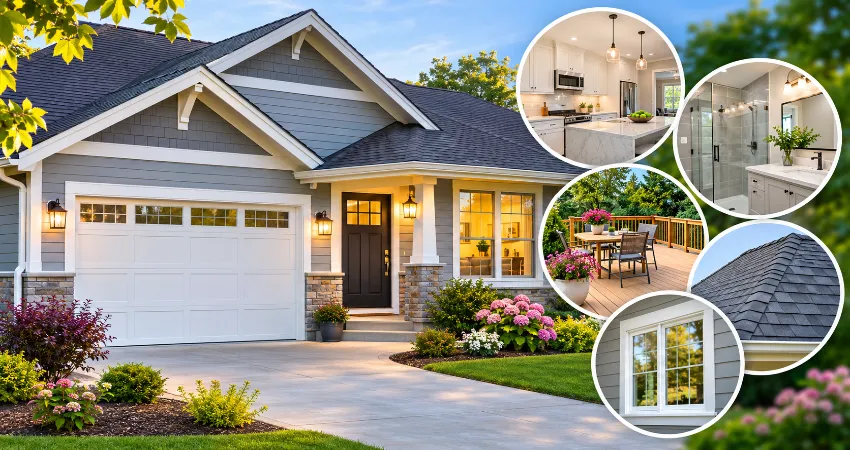
Not every home improvement increases a property’s selling price. Some renovations make a house more enjoyable to live in, while others address features buyers actively consider when making an offer. Understanding the difference can help homeowners avoid expensive projects that deliver limited resale value.
The most effective home upgrades usually improve everyday functionality, reduce maintenance concerns, or create a stronger first impression. A fresh entry door, updated kitchen, or well-maintained exterior can influence how buyers compare a property with similar homes in the neighborhood.
Research from Zonda’s 2025 Cost vs. Value Report and the National Association of REALTORS® (NAR) highlights several improvements with measurable resale benefits. This guide examines 12 upgrades worth considering, explains their potential value, and offers practical advice for choosing improvements that fit your home and local market.
1. Garage Door Replacement
A worn garage door can make an otherwise attractive property look neglected. Replacing it with a modern, durable model improves curb appeal and can enhance daily convenience. Buyers may also appreciate quieter operation, reliable safety sensors, and better weather protection.
Zonda’s 2025 report estimated that garage door replacement recovered approximately 268% of its cost nationally, making it the highest-ranked project in that study. This is a modeled national average, not a guaranteed return for every homeowner. Choose a style that complements the exterior rather than an unnecessarily expensive custom design.
2. Steel Front Door Replacement
The front entrance establishes an immediate impression of the property. An attractive steel entry door can improve appearance, security, and resistance to everyday wear. Modern insulated models can also help reduce unwanted air movement around the entrance when properly installed.
Zonda reported approximately 216% cost recovery for steel entry door replacement in 2025. Homeowners should prioritize appropriate sizing, weatherstripping, dependable hardware, and a finish that matches the house. Sometimes refinishing an existing door is more economical than replacing one that remains in excellent condition.
3. Minor Kitchen Remodeling
Kitchens influence purchasing decisions because they are used frequently and can be expensive to renovate. However, buyers do not necessarily need luxury cabinetry or professional-grade appliances. A clean, functional kitchen with adequate storage and coordinated finishes may be more appealing than an elaborate redesign.
Consider repainting sound cabinets, replacing damaged countertops, updating hardware, improving task lighting, and repairing outdated fixtures. Zonda’s 2025 report estimated approximately 113% national cost recovery for a midrange minor kitchen remodel. Preserving a functional layout can help control spending while improving appearance.
4. Bathroom Updates
Bathrooms receive considerable attention during home showings. Cracked tiles, leaking faucets, stained grout, and poor ventilation may raise concerns about maintenance. Addressing these issues can help buyers feel more confident about the home’s condition.
Useful improvements include a modern vanity, efficient fixtures, brighter lighting, and refreshed shower surfaces. A complete renovation is not always necessary. Zonda estimated roughly 80% cost recovery for a midrange bathroom remodel in 2025, suggesting that modest improvements may be more financially sensible when preparing to sell.
5. Fresh Interior Paint
Painting is often a practical way to refresh a home without changing its structure. Clean walls make rooms appear better maintained and allow potential buyers to imagine their own furniture and decorating preferences.
NAR’s 2025 Remodeling Impact Report identified interior painting among the improvements real estate professionals frequently recommend before selling. Neutral, coordinated colors generally offer more flexibility than highly personalized choices. Repair nail holes, damaged drywall, and uneven surfaces before painting, since preparation strongly influences the finished appearance.
6. Exterior Siding Improvements
Damaged or deteriorating siding can affect both the appearance and perceived maintenance requirements of a property. Replacing compromised materials can make the exterior look more consistent while addressing moisture-related vulnerabilities.
Zonda’s 2025 research estimated approximately 114% cost recovery for fiber-cement siding replacement and 97% for vinyl siding replacement. Results depend on material, installation, and location. Homeowners with structurally sound siding should consider whether professional cleaning, localized repairs, or repainting could achieve an adequate improvement at lower cost.
7. Manufactured Stone Veneer
Adding manufactured stone veneer to a carefully selected portion of the exterior can create visual contrast and a more finished appearance. Common applications include entryway surrounds and lower sections of front-facing walls.
The 2025 Cost vs. Value Report estimated around 208% cost recovery for its specified manufactured stone veneer project. That figure should not be applied to every stone installation. Proper moisture management, compatible materials, and professional installation are essential. A restrained design that matches surrounding homes is often more appropriate than covering an entire facade.
8. Roofing Replacement
Roof condition can significantly influence a buyer’s assessment of future maintenance expenses. Missing shingles, visible water damage, and unresolved leaks may complicate inspections or create concerns about additional repairs.
NAR’s 2025 remodeling research identified new roofing as an improvement attracting increased buyer demand. However, Zonda estimated about 68% cost recovery for asphalt-shingle roof replacement. The primary benefit may therefore be reducing transaction obstacles rather than generating a large direct return. Have a qualified roofer assess whether repair or replacement is justified.
9. Energy-Efficient Windows
Windows affect indoor comfort, natural light, outside noise, and heating or cooling requirements. Buyers may value windows that operate properly, seal effectively, and require little immediate maintenance.
Zonda estimated approximately 76% cost recovery for vinyl window replacement in 2025. Actual energy savings depend on climate, existing windows, and installation quality. Before replacing every window, investigate failed seals, damaged frames, and air leaks. Targeted repairs or weatherstripping may be worthwhile when complete replacement is unnecessary.
10. Outdoor Deck Improvements
Functional outdoor space can make a home more attractive to buyers who enjoy dining, relaxing, or entertaining outside. A well-proportioned deck effectively extends usable living space during suitable weather.
Zonda’s 2025 report estimated approximately 95% cost recovery for a wood deck addition and 89% for a composite deck addition. Material choice should reflect climate, maintenance expectations, and neighborhood standards. Existing decks should also be inspected for loose railings, deteriorated boards, and structural problems before cosmetic work begins.
11. Heating and Cooling System Upgrades
Reliable heating and cooling equipment contributes to comfort and can reduce concerns about immediate replacement costs. Buyers may ask about system age, maintenance history, and operating efficiency, particularly in regions with demanding seasonal temperatures.
Before replacing equipment, arrange a professional inspection and address neglected maintenance. If replacement is necessary, appropriate system sizing matters more than purchasing the largest available unit. Keep service records, warranties, and installation documentation available. A functioning system with documented maintenance may be preferable to an expensive upgrade made solely for resale.
12. Landscaping and Curb Appeal
Well-maintained landscaping helps buyers form a positive impression before entering the house. Overgrown shrubs, damaged walkways, and poorly maintained lawns can make routine property care appear more demanding.
Practical improvements include trimming plants, removing debris, repairing pathways, adding appropriate outdoor lighting, and keeping entrances accessible. Select vegetation suitable for the local climate and expected maintenance needs. Simple landscaping improvements often make more sense before selling than elaborate gardens requiring specialized upkeep.
How to Choose the Right Upgrades Before Selling?
The most profitable improvement is not necessarily the one with the highest national cost-recovery percentage. A homeowner selling in six months has different priorities from someone planning to remain in the property for ten years. Local competition, existing property condition, and buyer expectations should guide decisions.
For example, spending $4,000 refreshing a visibly dated kitchen may address an important weakness, while replacing attractive, functional countertops could provide little additional benefit. Compare recently sold properties, obtain multiple contractor estimates, and consult a local real estate professional before committing to major improvements.
Remember that cost recovery measures estimated resale value relative to project expense. It does not guarantee a matching increase in the final sale price. Permits, financing costs, unexpected repairs, and market changes can further affect the financial outcome.
Frequently Asked Questions
1. Which home upgrade adds the most resale value?
Garage door replacement ranked first in Zonda’s 2025 national cost-recovery analysis. However, the strongest improvement for an individual property depends on its condition and market. A home with serious roof damage may benefit more from resolving that problem than from installing a new garage door.
2. Is remodeling the kitchen worth it before selling?
A modest kitchen update can be worthwhile when existing finishes look tired or important fixtures need attention. Focus on visible condition, cleanliness, storage, and usability. Extensive renovations are harder to justify financially when the existing kitchen already competes well with similar neighborhood properties.
3. Do bathroom renovations increase home value?
Bathroom improvements can increase buyer appeal and contribute to resale value, particularly when they correct visible defects. Replacing worn fixtures and repairing damaged surfaces may be more practical than rebuilding the entire room. Compare the anticipated improvement with local housing standards before selecting a renovation budget.
4. Should I replace my roof before listing my house?
Replacement may be appropriate when the roof has significant damage, recurring leaks, or limited remaining service life. A roof in reasonable condition might only require maintenance or localized repairs. Obtain a professional assessment before spending money, and retain documentation to answer prospective buyers’ questions.
5. Are energy-efficient windows worth the investment?
They can improve comfort and reduce energy use under suitable conditions, but financial benefits vary. Climate, installation quality, and existing window performance matter. If windows are generally sound, repairing seals or improving weatherstripping may offer a less expensive solution than replacing every unit before selling.
6. What inexpensive upgrades attract home buyers?
Fresh paint, repaired fixtures, clean grout, updated cabinet hardware, and tidy landscaping can improve presentation without major structural work. Start by correcting obvious defects and maintaining consistent finishes. These changes can make a property easier to evaluate, although they do not guarantee a higher offer.
7. Does landscaping really affect a home’s selling price?
Landscaping contributes to curb appeal and can influence first impressions, but its financial impact is difficult to isolate. Buyers generally benefit from accessible walkways, healthy plants, and manageable outdoor spaces. Costly decorative installations may be less useful than straightforward maintenance and removal of overgrown vegetation.
8. Are luxury renovations a good idea before selling?
Luxury improvements are not automatically poor choices, but their costs can exceed what local buyers are prepared to recognize in the purchase price. High-end finishes may be appropriate in premium neighborhoods. For typical properties, durable materials, consistent design, and functional improvements often provide a more manageable financial approach.
9. How can I estimate the return on a home improvement?
Start with the complete project cost, including labor, materials, permits, and contingency expenses. Compare properties with similar improvements in your neighborhood and review regional remodeling data. Divide the estimated resale value attributable to the project by its cost, then multiply by 100 to calculate an approximate cost-recovery percentage.
10. Should I renovate my home or sell it as-is?
The answer depends on repair costs, available funds, selling timelines, and local market conditions. Minor repairs may expand buyer appeal, while extensive renovations can delay listing and create unexpected expenses. Request estimates and compare a realistic as-is sale scenario with the expected net proceeds after improvements.
Conclusion
The home upgrades buyers value most tend to improve appearance, functionality, or confidence in a property’s condition. Garage doors, entry doors, modest kitchen updates, and appropriate exterior improvements have demonstrated strong resale potential in national research.
Nevertheless, local conditions determine which investments make financial sense. Prioritize necessary repairs, avoid excessive customization, and evaluate each project against realistic selling expectations.
Leave a Reply